
Jai Shri Shri Anandamayi Mata Ki Jai
Sri Anandamayi Ma
The Bliss-Permeated Mother
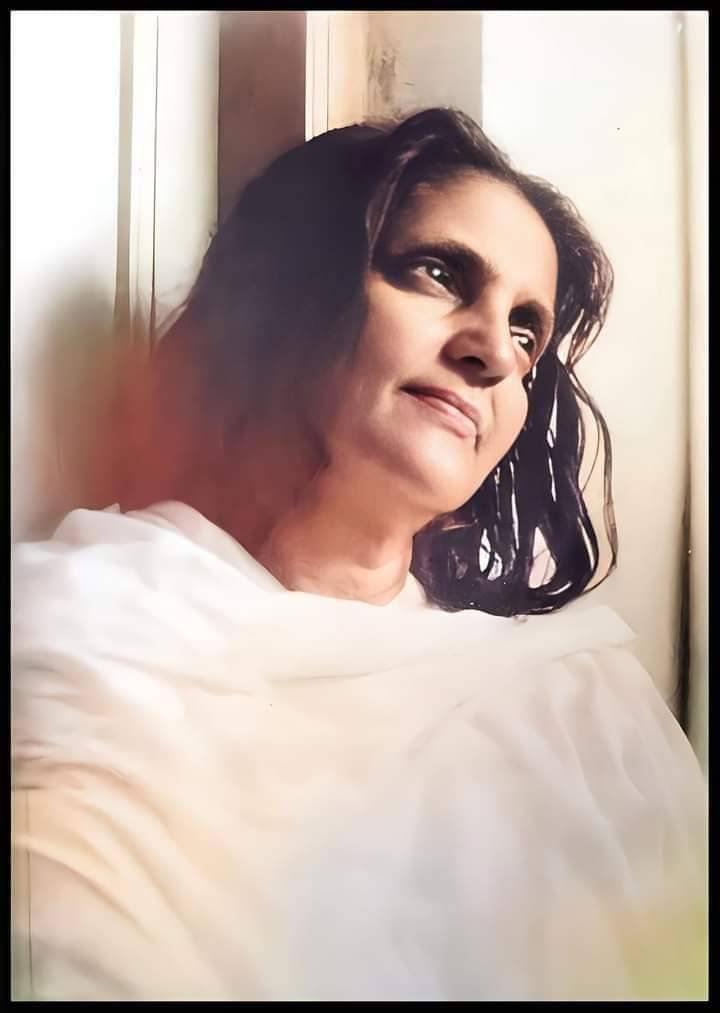
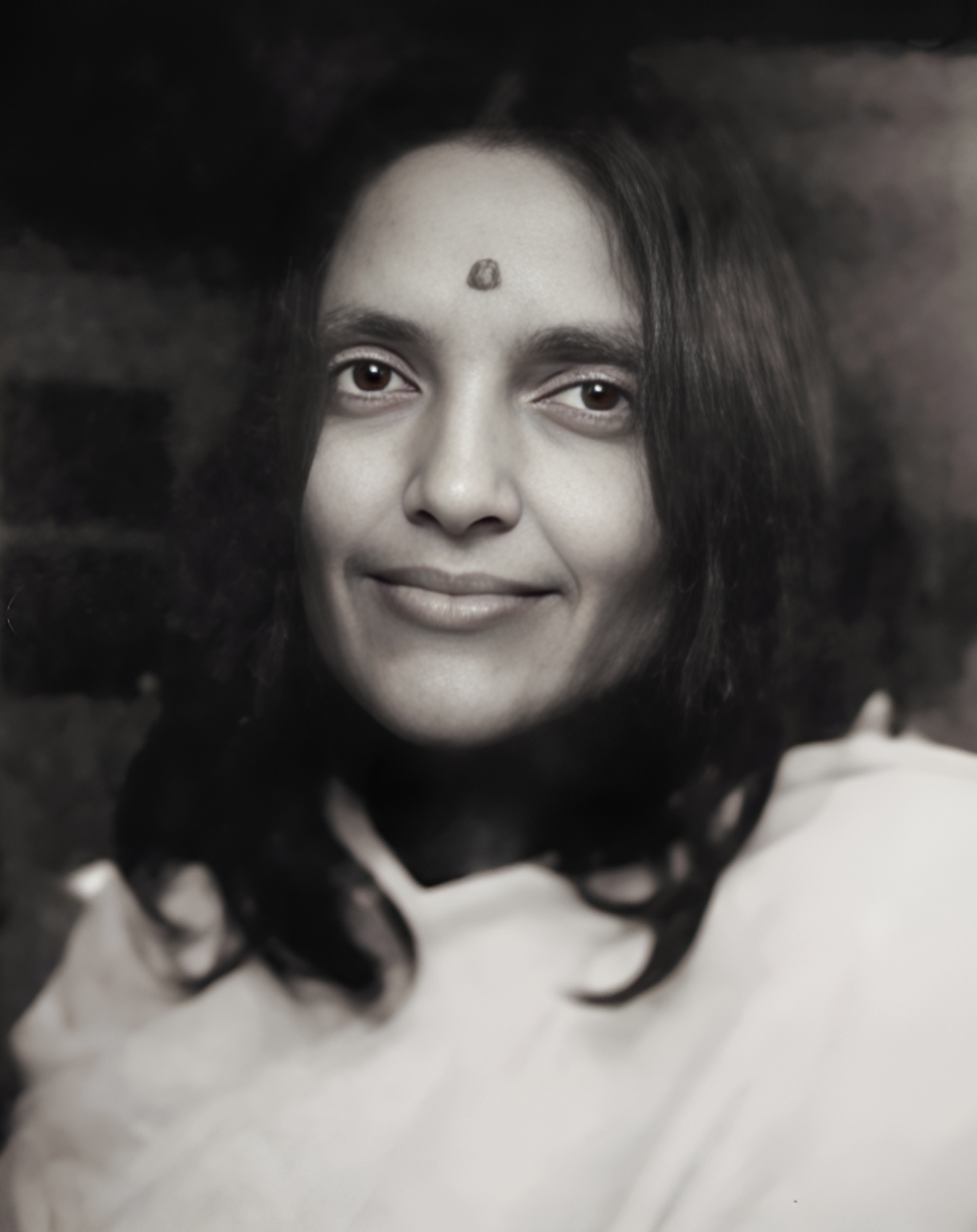
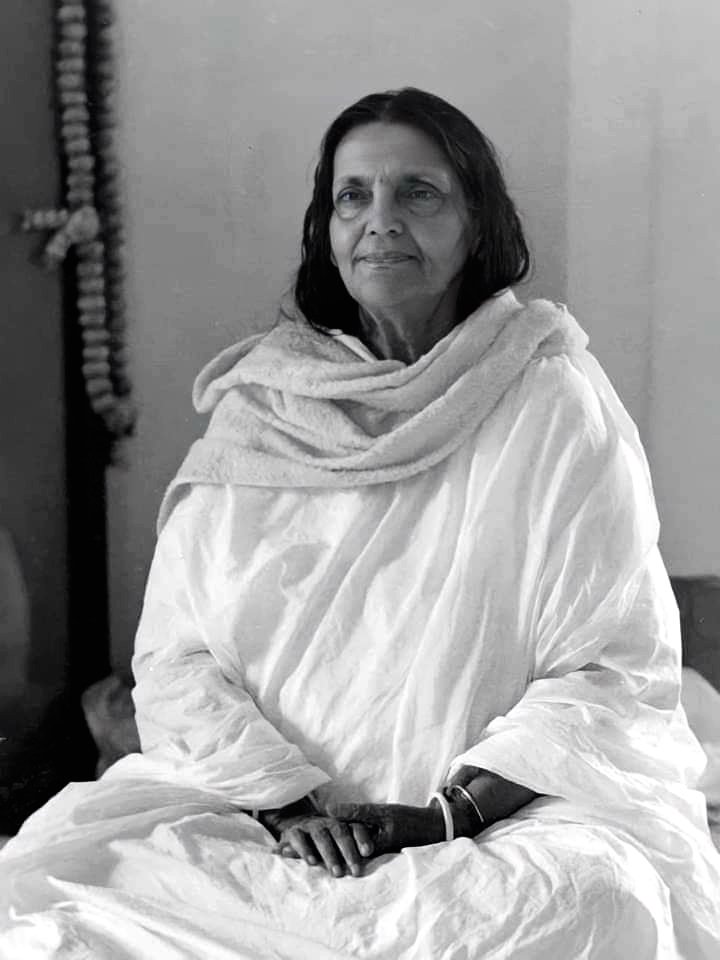
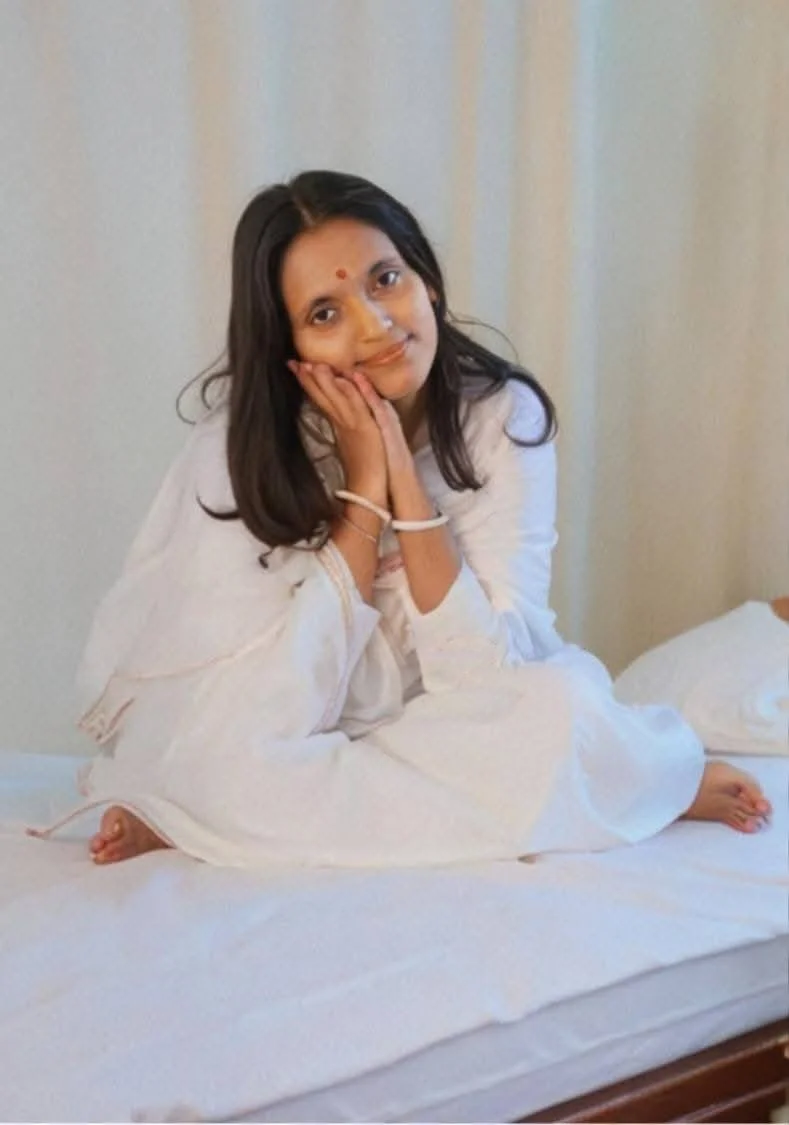
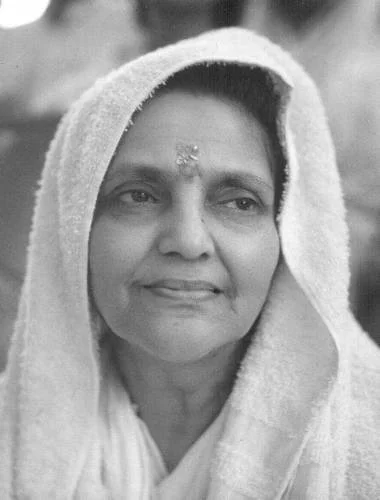
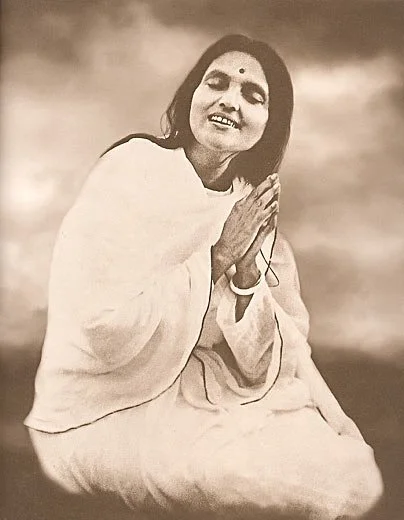
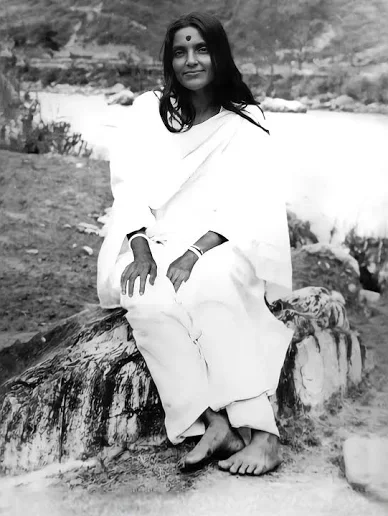
Sri Anandamayi Ma (1896–1982), affectionately known simply as Ma, is often described as one of the great Indian saints and mystics of the twentieth century.
For those who knew Her, however, words such as saint, mystic, teacher, and even Guru could never quite contain Her.
Many who lived beside Her understood Ma to be the Divine Mother Herself appearing in human form—not a person who journeyed toward realization, but a Being who arrived already fully realized, for whom separation from God had never existed.
This is how Ma is understood within the spiritual lineage of The Joyful Shelter.
And yet Ma rarely asked anyone to accept a particular definition of who She was.
People came to Her from different religions, cultures, castes, philosophies, and walks of life. Some saw a saint. Some saw their Guru. Some recognized the Divine Mother. Some encountered their own chosen form of God. Others simply found themselves inexplicably drawn to sit near Her.
Again and again, Ma pointed beyond the boundaries we place around the Divine.
There is only the One.
Her Life
Sri Anandamayi Ma was born Nirmala Sundari Devi on April 30, 1896, in the small village of Kheora, in what was then East Bengal and is now Bangladesh.
She was born into a devout Brahmin family and received very little formal education. Her outward life began simply: village life, household responsibilities, marriage, family, devotional song and worship.
Yet accounts of Ma's life describe something extraordinary from its very beginning.
Ma later spoke of possessing awareness from the time of Her birth, recalling people, surroundings, light, trees, and events from infancy. As a small child, She entered states of deep absorption during devotional singing. Those around Her did not always understand what they were witnessing.
At twelve years old She was married to Ramani Mohan Chakravarty, later known as Bholanath. Their marriage would eventually become something very different from an ordinary marital relationship. Bholanath came to recognize Ma as his spiritual teacher and later received initiation from Her.
A Realization That Was Never Attained
The usual story of a saint is the story of a seeker:
A person searches.
A teacher appears.
Spiritual disciplines are undertaken.
Eventually, realization dawns.
Ma's story does not follow this pattern.
She had no human Guru who brought Her to realization.
In 1922, what has become known as Ma's self-initiation arose spontaneously through Her. Mantras emerged from Her lips. Mudras, yogic postures, ritual actions, and complex spiritual practices manifested through Her body without conventional training.
Ma would later say of this period:
“Sadhanas by which man endeavours to attain self-realization are of endless variety, and each variety has innumerable aspects. All these revealed themselves to me as a part of myself.”
Those close to Her gradually came to understand that they were not witnessing an ordinary seeker becoming realized.
Within Ma's tradition, She is understood as having arrived already fully realized. There was no moment in which Ma became what She was. The journey toward realization that characterizes the spiritual seeker's path was not necessary for Her.
She simply was.
Who Was Ma?
There are aspects of Anandamayi Ma's life that cannot be explained by biography alone.
The diaries, memoirs, and recollections of people who actually lived and traveled with Her preserve accounts of extraordinary events surrounding Her throughout Her life.
They describe spontaneous knowledge of mantras and spiritual disciplines She had never studied. Extraordinary transformations and states occurred through Her physical body. At times She remained absorbed beyond ordinary bodily awareness. She displayed knowledge of people, events, spiritual traditions, and circumstances that those around Her could not explain through ordinary means.
There are accounts of Ma knowing that someone was calling to Her from far away.
Accounts of people experiencing Her presence when Her physical body was elsewhere.
Accounts surrounding illness and death in which devotees experienced Ma coming to them.
Accounts of Ma suddenly changing the course of a journey because something—or someone—was calling.
Accounts of sacred places, temples, and forgotten objects drawing Her seemingly without prior knowledge of their existence.
And there were countless quieter encounters.
People sometimes traveled great distances carrying carefully prepared spiritual questions, only to sit before Ma and discover that every question had disappeared.
There was only Ma.
These accounts are not offered here as a demand for belief.
They are part of the testimony left by those who knew Her.
Within the lineage carried through The Joyful Shelter, Ma is understood not simply as an unusually enlightened human being, but as Divine Consciousness taking a human appearance.
Her life continually presents the same mystery:
Who was this Being?
Perhaps Ma never intended for that question to be answered neatly.
She Met Each Person Where They Were
One of the most beautiful—and sometimes confusing—qualities of Ma's teaching was that She did not give everyone the same instruction.
At times, Her guidance to two different people could appear to contradict itself completely.
She might encourage one person toward a particular discipline while directing another away from it. She might emphasize renunciation for one seeker while instructing another to return fully to family responsibilities. What was medicine for one person was not necessarily medicine for another.
Ma was not teaching a system.
She was teaching the person before Her.
Those close to Her understood Her guidance as arising from a direct knowing of the individual—their temperament, karma, spiritual maturity, circumstances, and unique relationship with the Divine.
For this reason, an isolated statement from Ma should not always be understood as a universal commandment.
The question is not only:
What did Ma say?
It is also:
To whom was Ma speaking?
Many Paths. One Divine.
People from many religious traditions came to Ma.
She did not require them to abandon their faith in order to come nearer to God.
Her extraordinary familiarity with spiritual traditions extended beyond what could reasonably be attributed to Her limited formal education. Her recorded life includes encounters with and knowledge of traditions outside the particular religious world into which She was born.
For Ma, different names and forms did not divide the Divine.
The paths may differ.
The languages may differ.
The practices may differ.
The names by which we call God may differ.
But That toward which they point is One.
This universality did not make Ma's spirituality vague. Quite the opposite. She could be extraordinarily precise about an individual's practice precisely because Her guidance did not require every person to walk the same road.
There was no single path to Ma because, for Ma, there was nowhere God was not.
Five Supports for Sādhana
Although Ma's guidance was deeply individual, She repeatedly encouraged several practices as powerful supports for spiritual life.
Five are especially associated with Her teachings:
Pūjā
Worship.
The offering of our attention, actions, love, and devotion to the Divine.
Pāṭh
Sacred reading and recitation.
Keeping the mind near Truth through scripture, prayer, sacred texts, and the spoken remembrance of Divine wisdom.
Japa
Repetition of mantra or the Divine Name.
Returning again and again to God through sacred sound until remembrance begins to permeate ordinary life.
Kīrtan
Devotional singing.
Calling the Divine through song—not merely as performance, but as prayer, remembrance, and surrender.
Satsang
Keeping company with Truth.
Gathering with those who turn our awareness toward God; listening to spiritual teaching, chanting, practicing, and remembering together.
These are not “five rules” that Ma required every person to follow.
They are doors.
For one person, a door may open through mantra. For another, service. For another, silence. For another, devotion. For another, inquiry. For another, something entirely unexpected.
Ma met each person where they stood and directed them according to what was needed for their journey toward the Divine.
The Heart of Ma's Teaching
Beneath all of Ma's instructions was a persistent invitation:
Remember God.
Not only in temples.
Not only during meditation.
Not only when life feels sacred.
Here.
In family life.
In work.
In suffering.
In joy.
In uncertainty.
In prayer.
In the person standing before you.
Within yourself.
Spiritual life was not something separate from life itself.
Every circumstance could become part of sādhana.
Every relationship could reveal something.
Every path, followed sincerely toward its source, could ultimately lead toward the One.
Ma's Words of Assurance
For those who loved Ma, Her physical departure in 1982 did not mean the disappearance of Her presence.
Perhaps no explanation of that relationship is more beautiful than Ma's own assurances:
“For this body, the question of accepting or declining anyone does not arise. At all times and under all circumstances, in inspiration and dryness, this body remains and ever will remain with everyone.”
“Solely for you is indeed everything that this body says or does—its actions, movements, its going hither and thither. Whatever is done for your sake through this body at any time, it is you who causes it to happen.”
“For one who knows me, I am one with him. For one who wants to know me, I am very near to him, and for one who does not know me, I am a beggar before him.”
And perhaps the most sacred assurance of all:
“You ask me if I love you? You may or may not be able to be without me, but I simply cannot do without any of you.”
Ma Is
Sri Anandamayi Ma left Her physical body on August 27, 1982.
And yet those who love Ma rarely experience Her story as ending there.
Her photographs remain on altars. Her words continue to be read. Her Name is sung. Stories of Her continue to pass from those who sat physically beside Her to generations who never saw that form.
And people who never met Anandamayi Ma in Her body continue to speak of meeting Ma.
Perhaps this is why speaking about Her entirely in the past tense has always felt insufficient.
The body called Nirmala Sundari appeared in Bengal in 1896.
The world came to call Her Anandamayi Ma.
But the Reality toward which Ma continually pointed was never born and cannot die.
Ma was.
Ma is.