
Varangian Anatolians
Anatolian Shepherds • Guardians • Companions
Varangian Anatolians is the Anatolian Shepherd breeding program of The Joyful Shelter L.L.C., born from our life on the land and our love for these extraordinary guardian dogs. Our focus is on raising healthy, capable, devoted Anatolians and thoughtfully placing them with families, farms, and homesteads prepared to understand and appreciate this remarkable breed.
At Varangian Anatolians, we believe an Anatolian Shepherd should first and foremost be an Anatolian Shepherd.
Our breeding program is centered on the breed's original purpose: producing capable, intelligent, devoted guardians who can live and work alongside the people and animals entrusted to them. While our puppies may certainly go on to show, sport, or other pursuits, our primary focus is not producing dogs solely for the show ring. We are breeding with farms, homesteads, working environments, and families in mind.
Health testing is an important part of our breeding decisions, but we do not believe responsible breeding means chasing an imaginary standard of biological perfection. We consider the whole dog—health, structure, temperament, working ability, longevity, pedigree, quality of life, and the strengths and weaknesses of a proposed pairing.
A less-than-perfect result on an orthopedic evaluation does not automatically mean that an otherwise healthy, functional dog has no place in a responsible breeding program. When concerns are identified-often in partnership with our vet- we consider the severity, the potential heritability and welfare implications, the qualities of the individual dog, and the health and structure of the proposed mate. Significant conditions that could compromise a dog's welfare or create an unacceptable hereditary risk are a different matter, and we take those very seriously.
We also recognize the realities of working-dog life. Anatolians living on farms and homesteads are not ornaments. They run acreage, encounter livestock and wildlife, work in changing weather and terrain, and sometimes experience the bumps, injuries, and realities that come with an active life. We believe responsible ownership means providing appropriate care, veterinary attention when it is needed, and making decisions with the dog's welfare at the center—without pretending that every working dog's life will look like that of a companion animal living in a controlled environment.
Ultimately, our goal is not to create a “perfect” Anatolian. Our goal is to preserve and produce sound, capable, stable Anatolians who can do the work this remarkable breed was created to do—and live full, well-cared-for lives while doing it.
Puppies have Arrived!
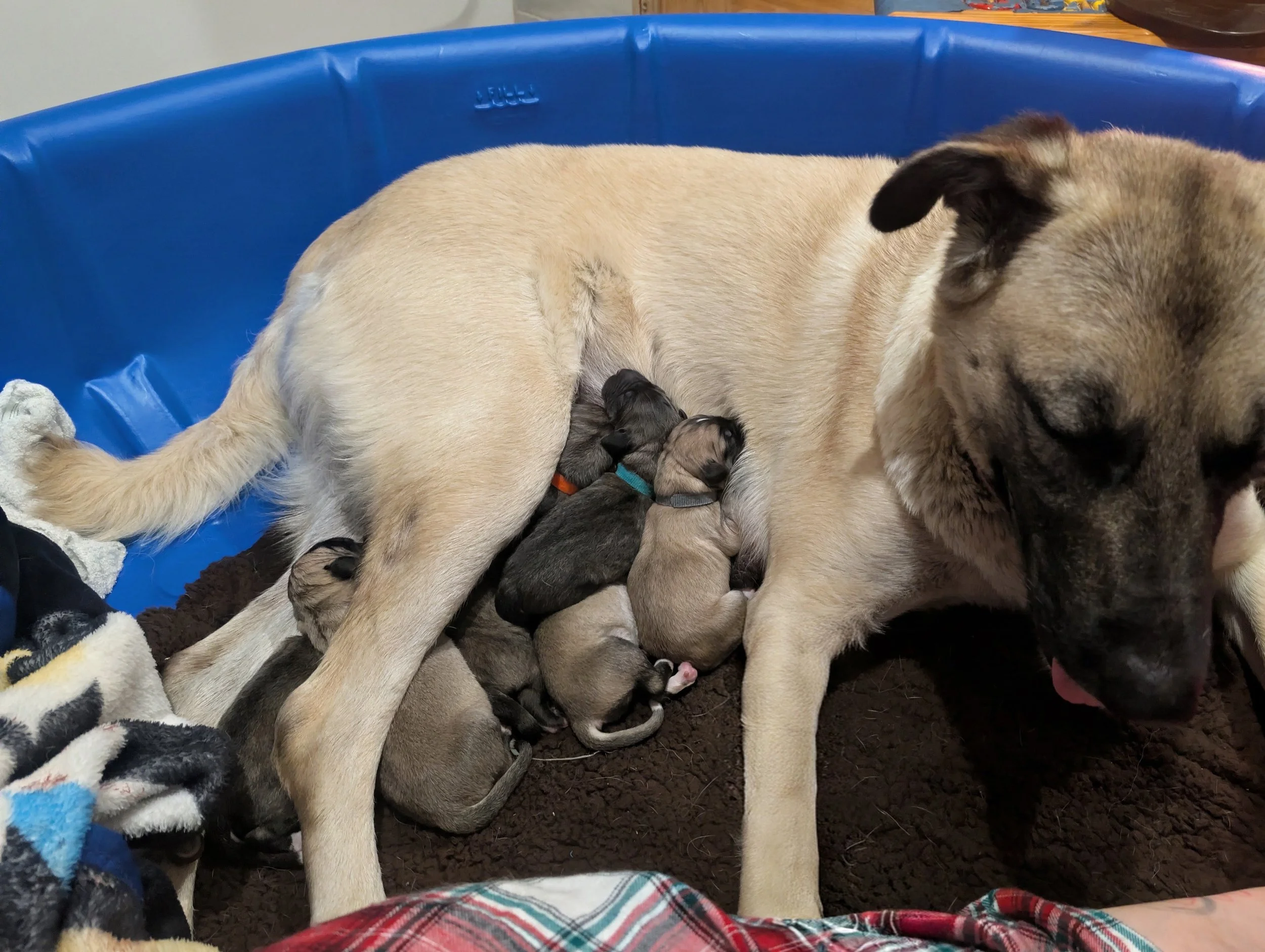
Our Puppies Have Arrived! 🐾
We are delighted to announce that Eden and Zion welcomed seven beautiful Anatolian Shepherd puppies on October 8, 2026!
Mama Eden and her little ones are doing wonderfully, and we are enjoying watching these precious babies grow.
Our puppies are raised with love and care here at Varangian Anatolians in Michigan's beautiful Upper Peninsula.
We will be sharing photos and updates as the puppies grow. If you're interested in welcoming one of these beautiful Anatolian Shepherds into your family, please reach out to learn more about availability and our reservation process.
Meet our Anatolians
About the Breed
The Anatolian Shepherd
The Anatolian Shepherd is an ancient livestock guardian breed developed to think independently, protect what belongs to them, and make decisions without waiting for a person to tell them what to do. They are powerful, intelligent, deeply loyal dogs—and they are very different from breeds developed primarily for companionship or obedience.
Anatolians were bred to live alongside livestock and protect them from predators. Rather than herding animals, their job is to watch, assess, deter, and intervene when necessary. That heritage remains very much alive in the breed today, even in Anatolians who live primarily as family companions.
Independent by Nature
Anatolians are incredibly intelligent, but their intelligence doesn't always look like traditional obedience. They were bred to make decisions on their own, sometimes far away from their human handler. An Anatolian may understand perfectly well what you're asking and still decide that something else requires their attention.
Their independence should never be mistaken for a lack of intelligence. Quite the opposite—sometimes your Anatolian may simply decide that their assessment of the situation outranks your suggestion.
Training matters tremendously, particularly while they are young. Successful training requires consistency, patience, clear boundaries, and an understanding of the breed. Anatolians generally respond far better to a relationship built on trust and respect than to heavy-handed handling.
They also tend to mature slowly, making puppyhood and adolescence especially important periods for socialization, handling, training, and establishing the relationship between dog and owner.
Natural Guardians
Protectiveness is not something that needs to be taught to an Anatolian—it is part of who they are.
They are naturally watchful of their territory and the people and animals they consider theirs. Many will position themselves between their family or livestock and something unfamiliar, quietly observing before deciding whether intervention is necessary.
A well-adjusted Anatolian should not simply be indiscriminately aggressive. Confidence, discernment, and stability are qualities we value greatly in the breed.
Their independence and natural protective instincts are exactly what make Anatolians extraordinary guardians—and also why they are not the right dog for everyone.
Big Dogs With Big Opinions
Anatolians are large, physically powerful dogs. Adult males can reach around 150 pounds, with females generally smaller, although individual size varies considerably.
Their size combined with their independence makes early manners important. A behavior that seems adorable in a 20-pound puppy can become considerably less charming when that puppy becomes a 100+ pound guardian with opinions of his own.
Secure containment, appropriate space, early socialization, and clear household expectations are especially important.
Working Dogs & Family Dogs
Anatolians can be extraordinary livestock guardians and wonderful family companions. Some spend their days protecting goats, sheep, poultry, or other livestock. Others live much more closely alongside their human families. Many do some combination of both.
Despite their imposing appearance and serious working instincts, Anatolians can be incredibly affectionate with the people they consider their own. Many thoroughly enjoy attention, treats, lounging with their people, and simply being included in everyday life.
But an Anatolian is not simply a giant pet dog. Whether guarding a herd or sleeping on your couch, they remain a livestock guardian breed with generations of instinct behind their behavior.
Is an Anatolian Right for You?
We don't believe someone needs to have owned an Anatolian before to provide one with an excellent home. We do believe prospective owners should understand what they're choosing.
Anatolians tend to do best with people who appreciate an independent dog rather than expecting unquestioning obedience; who are prepared for their adult size and strength; who can provide appropriate boundaries, containment, socialization, and care; and who respect the instincts that make this breed what it is.
For the right person, family, farm, or homestead, there is truly nothing quite like living alongside an Anatolian Shepherd.
They are guardians by instinct, partners by relationship, and deeply devoted to what they call their own.
Characteristics & Temperament
No two Anatolians are exactly alike, and individual personalities can vary considerably. But there are certain characteristics that make the breed unmistakably Anatolian.
They are typically calm, observant, intelligent, independent, territorial, protective, and deeply loyal. The official AKC standard describes the desired temperament as alert and intelligent, calm and observant. Reserve with strangers is acceptable and entirely consistent with the breed's purpose.
One of the more interesting things about living with an Anatolian is how much time they can spend simply watching.
A working dog may settle somewhere that gives them a good view of their animals and territory, conserving energy while quietly keeping track of everything around them. When something changes—a strange animal, unfamiliar vehicle, unusual sound, or person approaching the property—they can shift from resting to working remarkably quickly.
That calm vigilance is an important part of the breed. An Anatolian doesn't need to be constantly moving or visibly “working” to be doing their job.
Size & Build
Anatolian Shepherds are large and substantial, but they should also be functional and agile rather than excessively heavy or cumbersome.
According to the AKC breed standard, mature males should stand from 29 inches at the shoulder and approximately 110–150 pounds, while mature females should stand from 27 inches and approximately 80–120 pounds. Balance and proportion are considered more important than sheer size.
They have strong bone, muscular bodies, deep chests, and a structure built for endurance. Despite their impressive size, a well-built Anatolian should be capable of moving efficiently across significant amounts of territory.
This is, after all, a dog developed to work—not simply to look imposing.
Colors & Markings
One of the beautiful things about the Anatolian Shepherd is the amount of natural variation within the breed.
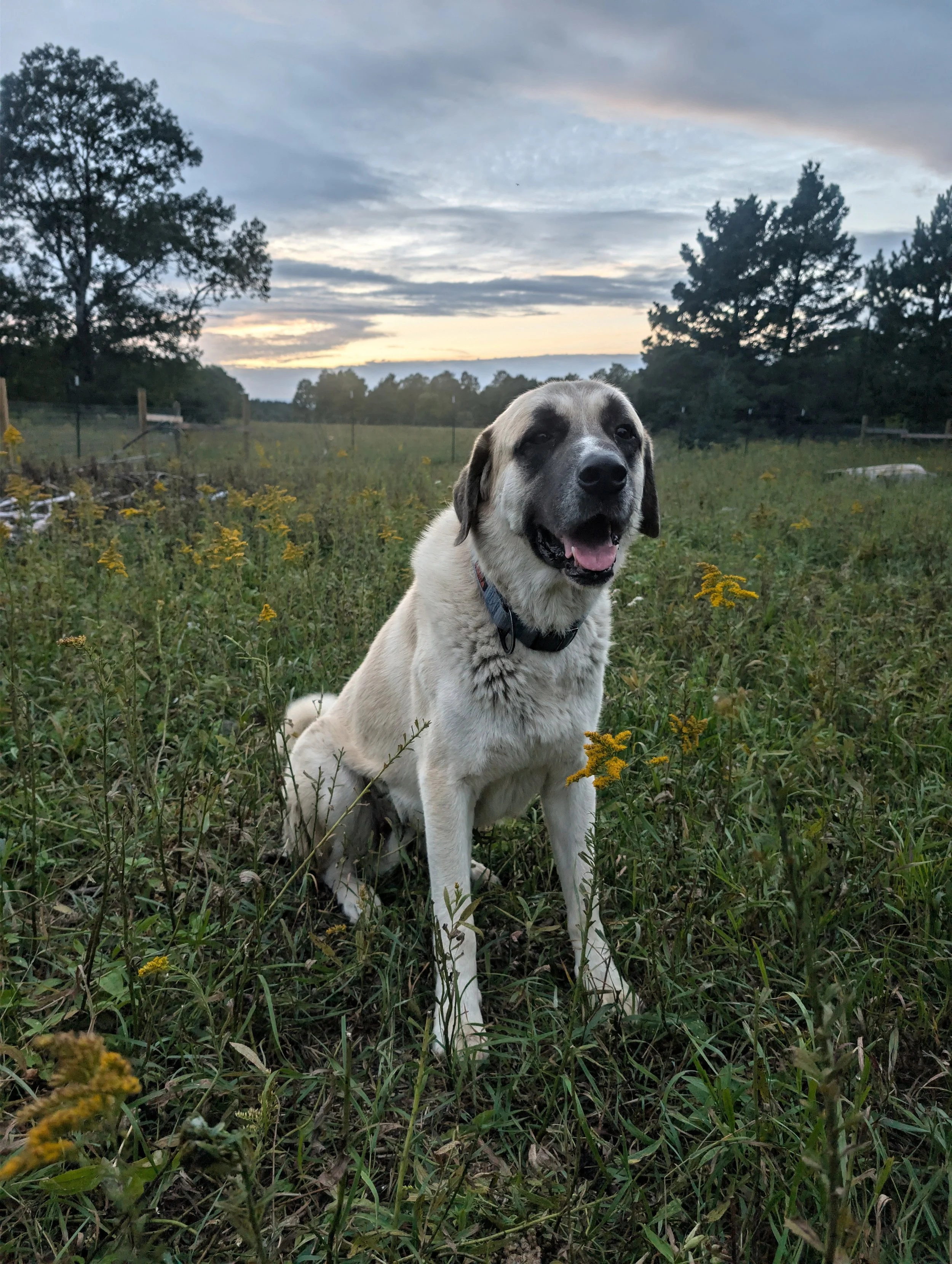
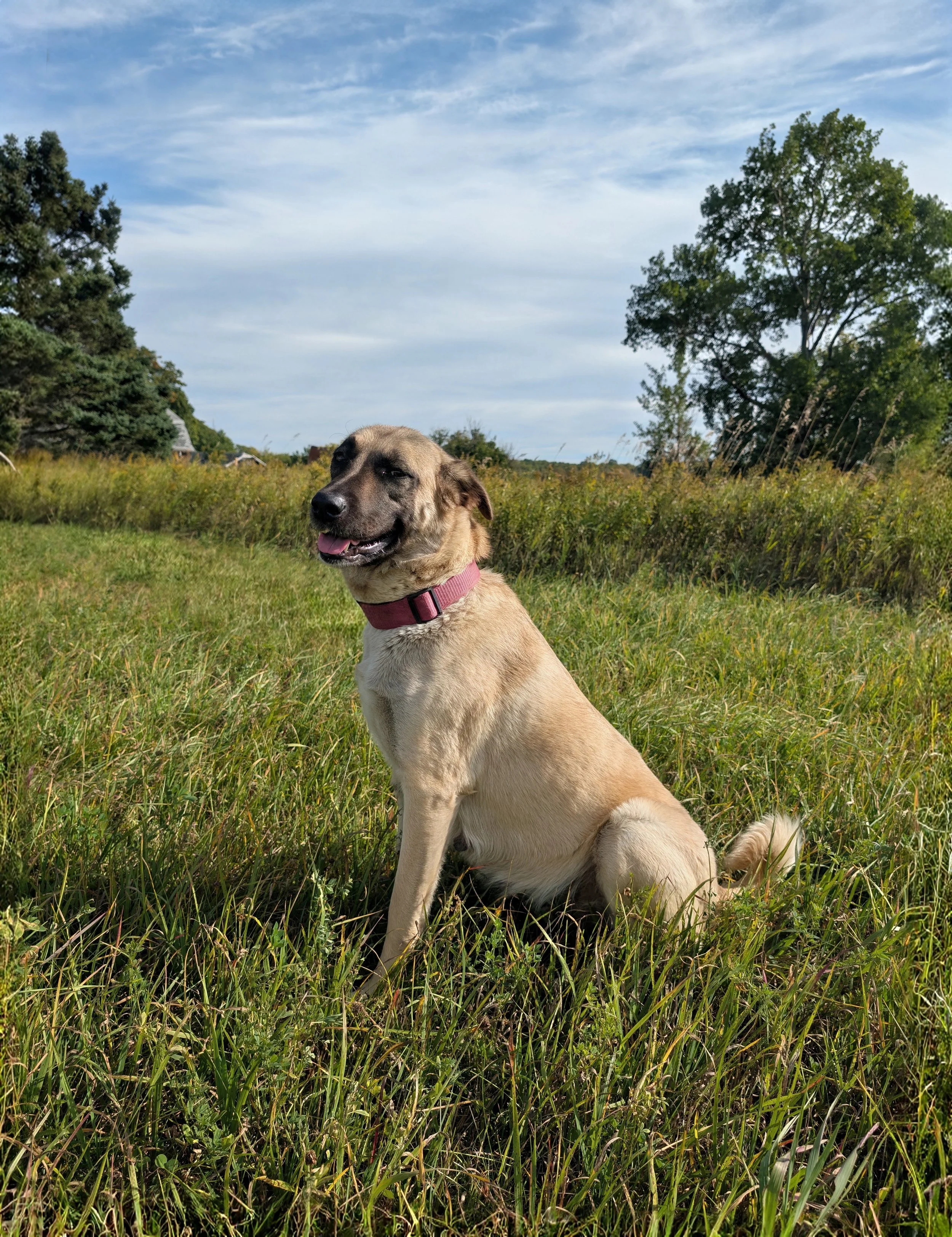
The classic fawn coat with a black mask may be the image many people immediately associate with an Anatolian—and is the coloring of both Zion and Eden—but the breed occurs in a much wider variety of colors and patterns.
AKC-recognized colors include fawn, red fawn, gray fawn, blue fawn, liver, white, biscuit and white, and brindle, and the breed standard allows all color patterns and markings equally. Anatolians may also appear with different masks, pinto patterns, and other markings.
In other words, an Anatolian does not have to be fawn with a black mask to be an Anatolian.
Historically, function has mattered far more than fashion. Color should never outweigh soundness, temperament, and a dog's ability to perform the work for which the breed was developed.
Coat & Grooming
Anatolians have a protective double coat designed for life outdoors. A dense undercoat provides insulation, while the outer coat offers additional protection from the elements.
Coat length can vary. The official standard allows coats ranging from approximately one inch to roughly four inches, with somewhat longer hair around the neck and mane.
For most of the year, grooming is refreshingly straightforward. Regular brushing, along with routine nail, ear, and dental care, is generally sufficient.
And then comes shedding season.
Anatolians typically shed their undercoat heavily about twice a year. During these periods, owners should expect considerably more hair—and considerably more brushing—to remove the loose undercoat.
Their coat is functional and should remain that way. Anatolians do not require elaborate trimming, sculpting, or cosmetic grooming. Even dogs prepared for the show ring are traditionally presented in a natural condition.
Exercise, Space & Fencing
Despite their impressive size, Anatolians are not typically frantic, constantly moving dogs. Their traditional work required them to conserve energy while monitoring livestock and territory and then respond quickly when necessary.
That does not mean they don't need movement, space, or mental stimulation.
Working Anatolians often receive much of their exercise naturally through patrolling acreage and moving with livestock. Companion dogs need appropriate daily exercise and opportunities to engage both their bodies and their minds.
Secure containment is extremely important. Guardian breeds naturally think in terms of territory, and an Anatolian may decide that the property requiring their protection extends considerably farther than their owner intended.
Substantial physical fencing is strongly recommended rather than relying solely upon invisible fencing.
Barking
Yes. Anatolians bark.
For a livestock guardian, barking isn't necessarily a behavioral failure—it is one of their tools.
They use their voices to announce their presence, alert their people or livestock, and warn unfamiliar animals or people that they have entered protected territory. This can become particularly noticeable at night, when predators and wildlife are more active.
Individual dogs vary, and appropriate boundaries still matter, but prospective owners should not choose an Anatolian expecting to train every guardian bark out of them.
Their voice is part of how they were designed to work.
The Anatolian Shepherd Breed Standard*
For owners interested in showing an Anatolian in AKC conformation, dogs are evaluated against the official Anatolian Shepherd Dog breed standard. The standard describes the ideal characteristics of the breed and serves as the blueprint judges use when evaluating dogs in the show ring.
Some of the major characteristics of the Anatolian standard include:
Overall appearance: Large, rugged, powerful, and impressive while retaining endurance and agility. The dog should appear bold but calm unless challenged and remain unmistakably functional.
Size: Mature males are expected to stand from approximately 29 inches and weigh 110–150 pounds. Mature females are expected to stand from approximately 27 inches and weigh 80–120 pounds. Overall balance is more important than absolute size.
Body: Strong, muscular, and well proportioned without being fat, soft, or exaggerated. The body is slightly rectangular, the chest deep, and the overall construction should support endurance and efficient movement.
Head & expression: The expression should appear intelligent. Eyes range from dark brown to light amber and are almond-shaped. The head should be substantial and proportionate, with males generally having a broader, stronger head and muzzle.
Ears: V-shaped with rounded tips, hanging at the sides of the head. Erect ears are a disqualification under the AKC standard.
Bite: A scissors bite is preferred, although a level bite is acceptable. Overshot, undershot, or wry bites are disqualifications.
Eyes & pigmentation: Blue eyes or eyes of two different colors are disqualifications. Nose and lip pigmentation should be complete and black or brown; incomplete pigmentation is considered a serious fault.
Coat: The coat may range from short to rough, with a dense undercoat and somewhat heavier hair around the neck and mane. The coat should remain functional and protective rather than excessively groomed or stylized.
Color: Anatolians have tremendous freedom in color and markings. The official standard considers color patterns and markings equally acceptable; color should not outweigh type, soundness, or temperament.
Tail: Long and reaching approximately to the hocks. At rest it is generally carried low with the end curling upward; when alert, it may be carried high in the characteristic “wheel.”
Movement: Movement should be fluid, balanced, and functional, reflecting a dog historically expected to travel significant distances and respond rapidly when a threat appeared.
Temperament: Alert, intelligent, calm, and observant. Anatolians may appropriately be reserved with strangers. Excessive showiness or constant animated responsiveness is actually not characteristic of the breed.
*A Note From Varangian Anatolians
Varangian Anatolians is primarily a working and companion-focused breeding program, not a show-focused breeding program. We respect the AKC breed standard and believe it provides valuable guidance for preserving the structure, temperament, and characteristics that make an Anatolian an Anatolian. However, our breeding decisions are centered on the whole dog—health, functional soundness, temperament, working ability, quality of life, and the strengths and weaknesses of each pairing.
A dog does not need to represent every detail of the ideal show-ring standard to be an exceptional livestock guardian, farm dog, or family companion.
So if your adult male happens to top out at 25 inches and 100 pounds instead of 29 inches and 130, don't panic—your goats are unlikely to file a complaint, and the coyotes probably aren't carrying measuring tapes.
Unless showing is part of your plans, your Anatolian's value is not determined by how closely they could place in a conformation ring. Our priority is producing capable, stable, well-loved Anatolians who can live and work as the extraordinary dogs they were developed to be.